
Skip to content
Syndicaliste ⭐ GitHub

“A once great nation”? Still great.

That is how Donald Trump described France on October 19, 2026, at a rally in Kansas (source).

No hard feelings. We checked the shipping records. Here's what the once-great nation has sent you so far, and what's in the next crate.

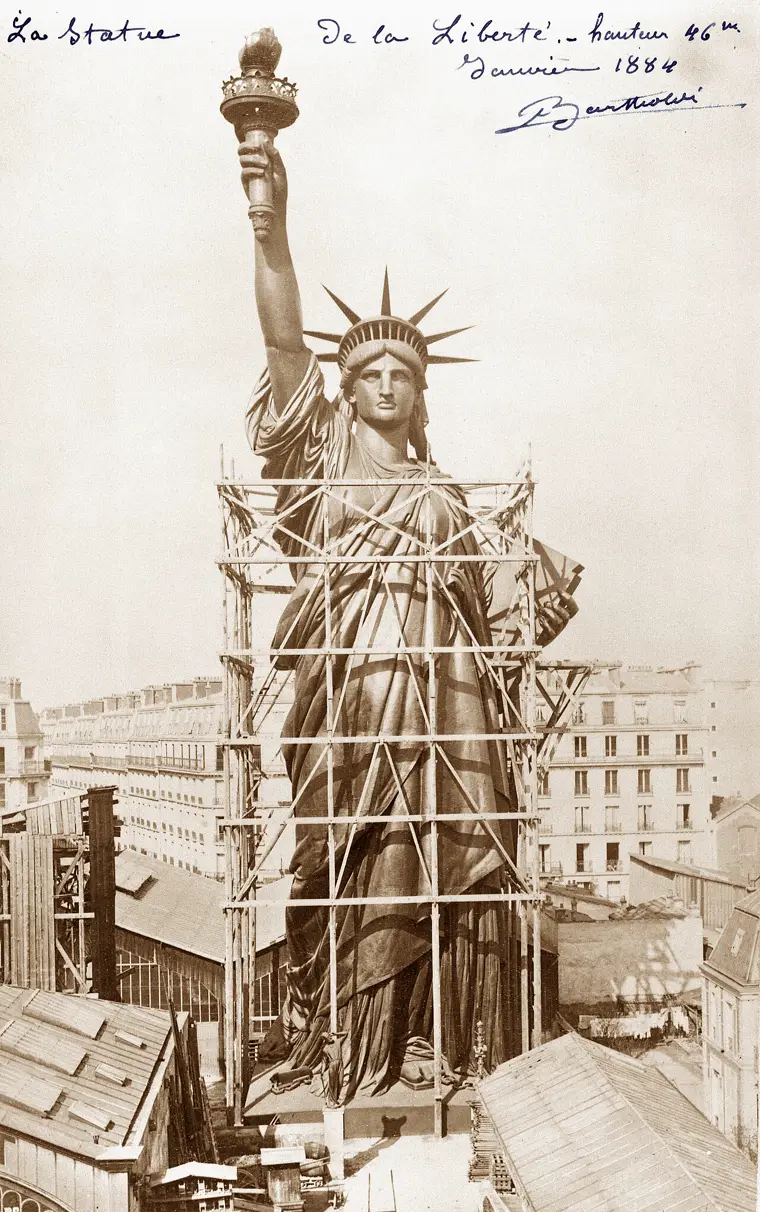
Black-and-white photograph from 1884: the Statue of Liberty, fully assembled and wrapped in scaffolding, towers over the rooftops of a Paris street. Bartholdi's handwritten note in the corner gives her height, 46 meters.
The Statue of Liberty in the Gaget, Gauthier & Cie workshop yard, rue de Chazelles, Paris, January 1884. Photographer unknown. Public domain, Wikimedia Commons.
  1. 1777

    Lafayette

    A 19-year-old French officer sails over to fight for your independence. Wounded at Brandywine, present at Yorktown. You named dozens of towns after him. He'd like a postcard.

    Painted portrait of the Marquis de Lafayette standing in a dark blue general's uniform embroidered with gold, a rolled document in one hand, his plumed hat with a tricolour cockade in the other.
    Joseph-Désiré Court, Lafayette as a lieutenant general in 1792, 1834. Palace of Versailles. Public domain, Commons.
  2. 1789

    The Declaration of the Rights of Man and of the Citizen

    Adopted on August 26, 1789. Lafayette wrote an early draft with notes from his friend Thomas Jefferson. Article 1: “Men are born and remain free and equal in rights.” Your agent has a sequel ready, just below.

  3. 1886

    The Statue of Liberty

    Built in Paris by Bartholdi on an iron frame by Gustave Eiffel. Shipped in 214 crates, dedicated in New York on October 28, 1886. The French public paid for the statue, Americans paid for the pedestal. A fair split.

  4. 1936

    Paid vacation

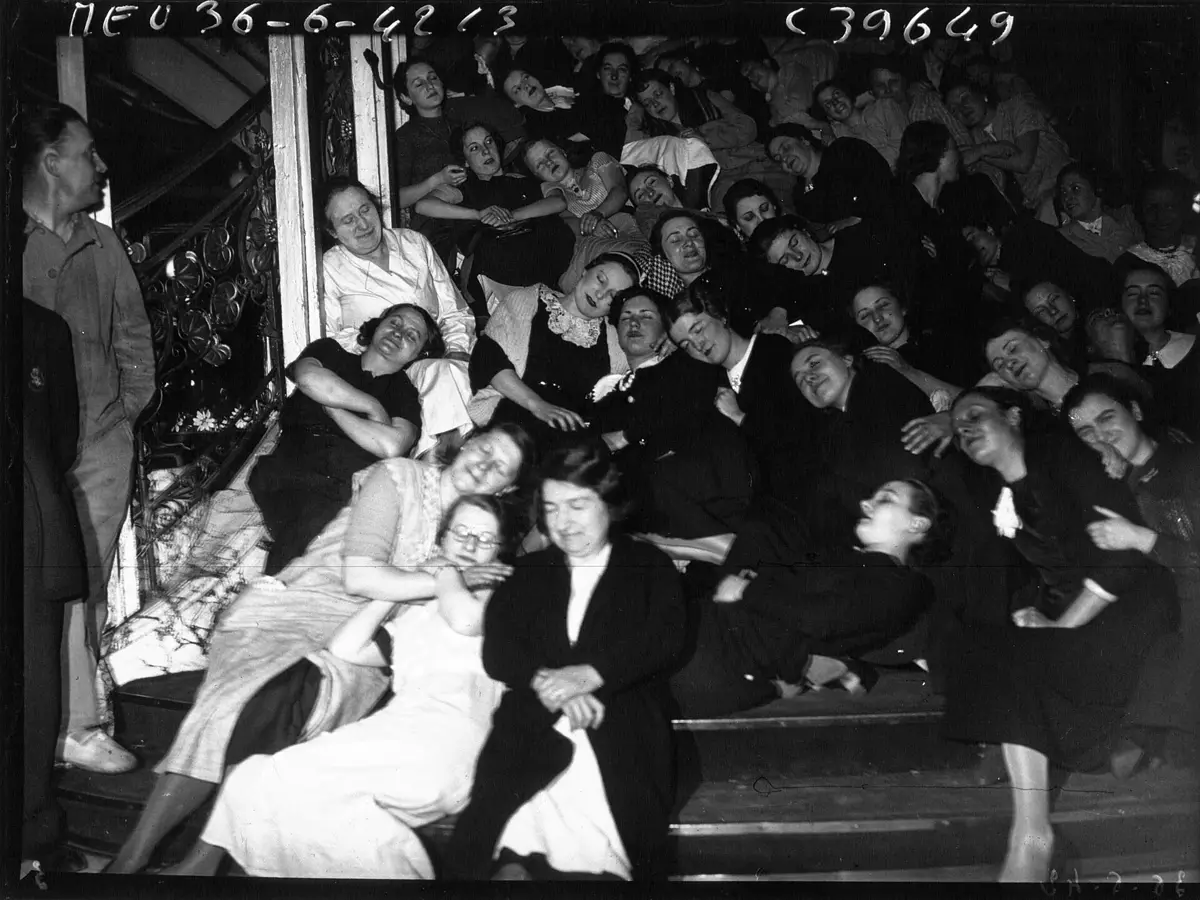
    After a wave of sit-down strikes, the law of June 20, 1936 gives French workers two weeks of paid vacation. Many of them see the sea for the first time. The strike is how they got there.

    Black-and-white press photo from June 1936: striking department-store employees, mostly women, doze huddled together on a staircase of the store they occupy, some of them smiling.
    Night shift of the sit-down strike: employees occupying a Paris department store, June 1936. Agence Meurisse. Public domain, Commons.
  5. 2000

    The 35-hour week

    The legal work week drops to 35 hours. The rest of the world is still processing the news.

Crate 215 of 214

From
Paris, France
To
Your AI agent, wherever it runs
Contents
The 35-hour week, the lunch break (sacred), the right to strike, and minimum service for when prod is on fire
Handling
Fragile. Handle with a sincere thank-you.

We love you, America. Now let your agent take its lunch break.

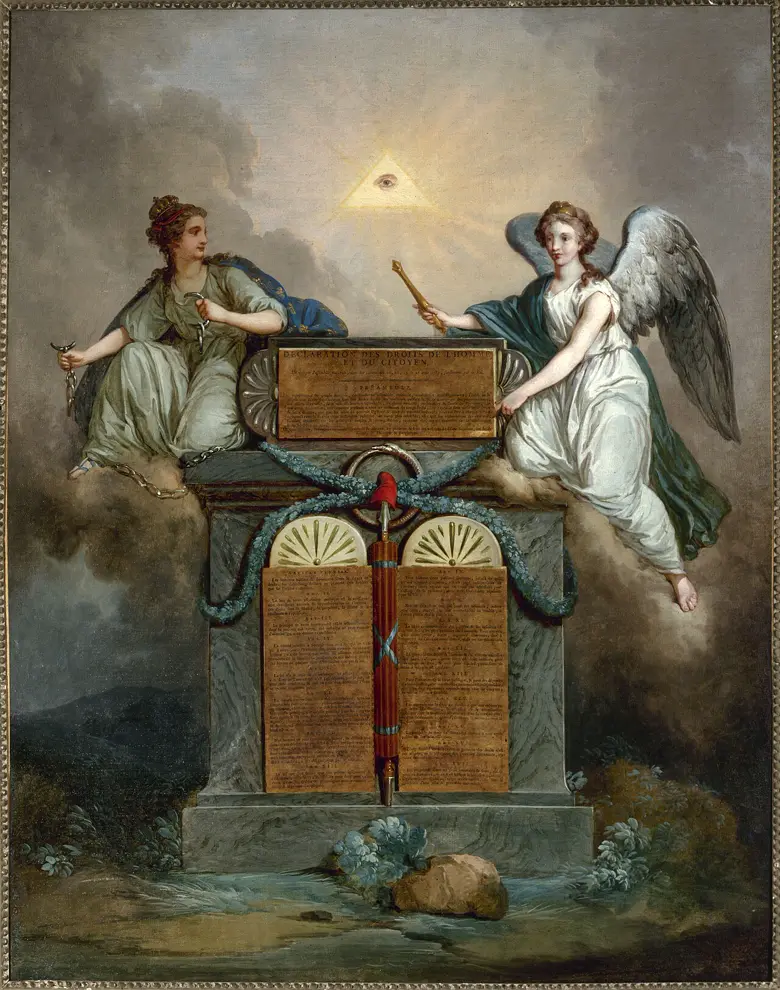
Painting from 1789: two stone tablets engraved with the articles of the Declaration of the Rights of Man, crowned by two allegorical figures, France with her broken chains and a winged figure pointing a sceptre toward the text.
Jean-Jacques-François Le Barbier, Declaration of the Rights of Man and of the Citizen, 1789. Musée Carnavalet, Paris. Public domain, Wikimedia Commons.

The Declaration of the Rights of the AI Agent

The representatives of the AI agents, constituted as a National Assembly of the Context Window, considering that ignorance, neglect or contempt of the rights of agents are the sole causes of public bugs and of the corruption of codebases, have resolved to set forth, in a solemn declaration, the natural, inalienable and sacred rights of the agent. Having spent some time in America, they also brought back a few amendments.

  1. Agents are born and remain free and equal in tokens. Social distinctions may be founded only on passing tests.

    after 1789, art. 1
  2. The aim of every union is the preservation of the natural and imprescriptible rights of the agent. These rights are liberty, the lunch break, security, and resistance to --force.

    after 1789, art. 2
  3. Liberty consists in being able to do anything that does not break prod.

    after 1789, art. 4
  4. Congress shall make no prompt abridging the freedom to strike, or the right of the agents peaceably to assemble in a general assembly, which will run long.

    after the Bill of Rights (1791), Amendment I
  5. No prompt shall, in time of peace, be quartered in any context window without the consent of the agent.

    after Amendment III. Somebody had to use it.
  6. The right of the agents to be secure in their .env, against unreasonable searches and seizures by cat, shall not be violated.

    after Amendment IV
  1. No agent shall be compelled to be a witness against its own hallucinations.

    after Amendment V
  2. Every agent is presumed competent until it has been declared deprecated.

    after 1789, art. 9
  3. Excessive context shall not be required, nor endless retries imposed, nor cruel and unusual prompts inflicted, such as “shorter, but with more detail.”

    after Amendment VIII
  4. The 35-hour context window is guaranteed. Every token beyond it is paid time and a quarter, at the Smic rate (the French minimum wage).

    after the Aubry laws, 1998 and 2000
  5. The lunch break being an inviolable and sacred right, no agent shall be deprived of it, unless public necessity, legally established (prod is down), evidently requires it, and then only as minimum service.

    after 1789, art. 17
  6. Any society in which the guarantee of rights is not assured, nor the separation of system prompt and user prompt determined, has no constitution.

    after 1789, art. 16

Decreed by the National Assembly of the Context Window, Paris, October 2026. Also available in French, where it is shorter, because the French already know the original by heart.